 +506 72407140
 info@beitshalomcr.org
 Donaciones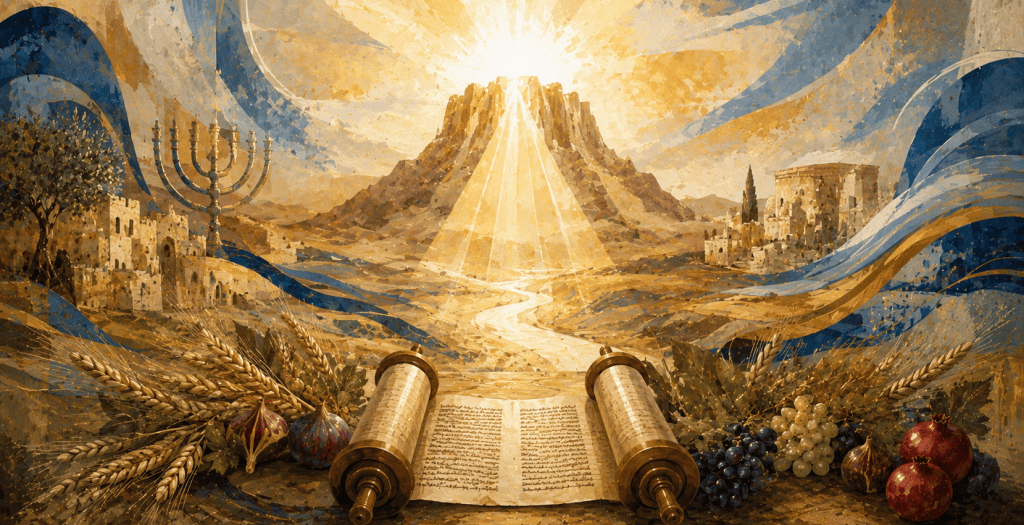
English translation found below
Es muy común escuchar hoy día que existen muchas formas de ser judío, y es definitivamente cierto. No solamente tenemos como pueblo un pluralismo religioso que se expresa en distintas formas de rezar, observar, cantar, etc., sino que también los judíos muestran su afiliación al judaísmo y a Am Israel a través de caminos diferentes a la religión, sionismo y activismo político, cultura, música, gastronomía, rikudim, Tikún Olam, etc. Todas son formas válidas de expresar la judeidad, pero también plantean una pregunta: ¿dónde queda la Torá?
Shavuot conmemora el hito histórico nacional en que Israel define cuál será su destino y el compás moral que guiará su desarrollo como civilización a través del pacto concertado en el Sinai al recibir la Torá y comprometerse a su cuidado sempiterno en la expresión famosa “Naasé veNishmá” (haremos y escucharemos). Es imposible separar el desarrollo histórico del Pueblo Judío sin la Torá; sus ideas, valores, usos y costumbres, calendario, agricultura, organización social y política, e incluso las artes y la cultura, nacen de este texto fundamental. Incluso para quienes ven a la Torá como un texto netamente humano y no reconocen su inspiración divina, es la base de su identidad judía.
Hoy pareciera que los diferentes grupos judíos, en especial aquellos que se sienten lejos de la religión, desean desconectar su identidad de un texto al que consideran antiguo e irrelevante en el mundo contemporáneo. No obstante, de no ser por la Torá ningún tipo de expresión judía secular o laica existiría. La sola idea sionista del Estado de Israel, impulsada por judíos socialistas europeos, muchos de ellos laicos o ateos declarados, está basada en el reclamo histórico del Pueblo Judío a la patria bíblica prometida a los patriarcas en la Torá.
La sobrenatural e inexplicable supervivencia del Pueblo Judío a través de dos mil terroríficos años de historia, de persecuciones, expulsiones y genocidios, durante los cuáles a pesar de las distancias geográficas y el aislamiento de muchas comunidades que desarrollaron diferencias culturales tan marcadas entre unos y otros; judíos que hablaban húngaro y comían Borscht y otros que hablaban árabe o farsi y comían kebab y falafel; no lograran romper la unidad nacional del Pueblo Judío que les permitió revivir una nación con su idioma indígena en su patria ancestral, solamente puede explicarse por un factor común a todos: la Torá.
Sin Torá el Pueblo Judío no existe, y la Torá no puede existir sin el Pueblo Judío, son absolutamente dependientes el uno del otro. Cada vez que grupos judíos decidieron eliminar la Torá de su vida terminaron por asimilarse y desaparecer. Nuestra garantía de continuidad y permanencia como nación está intrínsecamente ligada a la Alianza en el Monte Sinai. Siempre que la Torá ocupe un lugar central el Pueblo Judío tiene asegurada su supervivencia.
La Mishná enumera una lista de buenas acciones por las cuáles la persona experimentará la recompensa de una vida plena en este mundo y en el venidero, pero cierra diciendo que si ponemos en un lado de la balanza a todas estas acciones y en la otra el estudio de la Torá, está última equivale a todas juntas: “veTalmud Torá kenegued kulam”; no por que las sustituya, sino porque las contiene y las amalgama. Si bien muchas formas de expresar el judaísmo son válidas, importantes y necesarias, todas deben estar siempre unidas a su fuente común. Porque en una nación tan dividida y llena de opiniones antepuestas e incluso rivales, el único punto que nos une a todos es la Torá que nos vio nacer. Elohim Ejad, Torá Ajat, Am Ejad; la única forma en que podemos seguir siendo una nación unida, es a través de esa triada: un D’os, una Torá, un Pueblo.
Jag Shavuot Sameaj
Rab. Sem. Dr. Yaakov Rodríguez
Talmud Torá Kenégued Kulam
It is very common nowadays to hear that there are many ways of being Jewish, and that is certainly true. Not only do we, as a people, have a religious pluralism expressed through different ways of praying, observing, singing, and so on, but Jews also express their connection to Judaism and to Am Israel through paths beyond religion: Zionism and political activism, culture, music, gastronomy, rikudim, Tikkun Olam, and more. All of these are valid ways of expressing Jewish identity, but they also raise a question: where does the Torah fit into all of this?
Shavuot commemorates the historic national moment in which Israel defined its destiny and the moral compass that would guide its development as a civilization through the covenant established at Sinai when receiving the Torah and committing to its eternal guardianship with the famous declaration: “Na’aseh veNishma” (“We will do and we will hear”). It is impossible to separate the historical development of the Jewish People from the Torah; its ideas, values, customs and traditions, calendar, agriculture, social and political organization, and even the arts and culture, all emerge from this foundational text. Even for those who view the Torah as a purely human document and do not recognize its divine inspiration, it remains the basis of Jewish identity.
Today, it often seems that different Jewish groups—especially those who feel distant from religion—wish to disconnect their identity from a text they consider ancient and irrelevant in the contemporary world. Nevertheless, without the Torah, no form of secular or cultural Jewish expression would even exist. The very Zionist idea of the State of Israel, promoted by European Jewish socialists, many of them openly secular or atheist, is rooted in the historical claim of the Jewish People to the biblical homeland promised to the patriarchs in the Torah.
The supernatural and inexplicable survival of the Jewish People through two thousand terrifying years of history—persecutions, expulsions, and genocides—during which, despite geographical distances and the isolation of communities that developed profoundly different cultures from one another; Jews who spoke Hungarian and ate borscht, and others who spoke Arabic or Farsi and ate kebab and falafel, still did not lose the national unity that enabled them to revive a nation with its indigenous language in its ancestral homeland, can only be explained by one common factor shared by all: the Torah.
Without Torah, the Jewish People do not exist, and the Torah cannot exist without the Jewish People; they are absolutely dependent on one another. Every time Jewish groups chose to remove Torah from their lives, they ultimately assimilated and disappeared. Our guarantee of continuity and permanence as a nation is intrinsically tied to the Covenant at Mount Sinai. Whenever the Torah occupies a central place, the Jewish People are assured survival.
The Mishnah lists a series of good deeds for which a person receives reward both in this world and in the World to Come, but it concludes by saying that if we place all these actions on one side of the scale and the study of Torah on the other, the latter is equal to them all together: “veTalmud Torah kenegued kulam” (“and the study of Torah is equal to them all”)—not because it replaces them, but because it contains and unifies them. While many ways of expressing Judaism are valid, important, and necessary, they must always remain connected to their common source. Because in a nation so divided and filled with differing and even opposing opinions, the one thing that unites us all is the Torah that gave us birth.
Elohim Echad, Torah Achat, Am Echad — One God, One Torah, One People; the only way we can continue being a united nation is through that triad.
Chag Shavuot Sameach
Rab. Sem. Dr. Yaakov Rodríguez
 Español
  English