 +506 72407140
 info@beitshalomcr.org
 Donaciones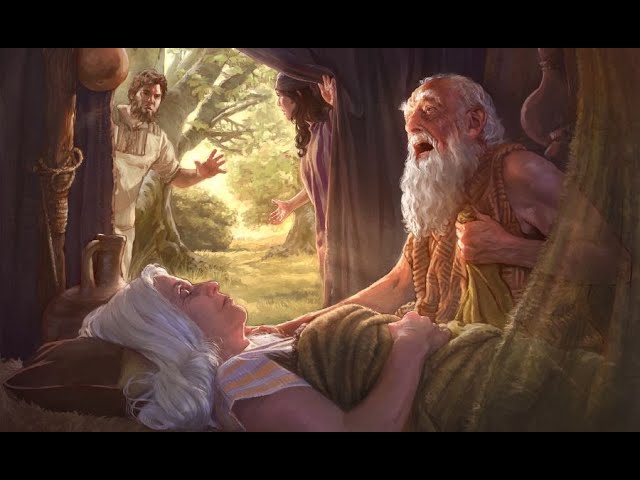
English translation found below
En la Parashá de esta semana se nos relata la partida de nuestra matriarca Sara Imenu de este mundo físico. Curiosamente esta porción de la Torá inicia diciendo literalmente: “y fueron las vidas de Sara, cien años, y veinte años, y siete años, los años de la vida de Sara”; en ningún otro lugar de todo el Tanaj se hace una descripción tan extraña sobre la edad del fallecimiento de una persona.
De aquí interpretan muchos parshanim (comentaristas) que Sara Imenu vivió en su vida varias vidas que impactaron y trascendieron su entorno y el futuro del Pueblo Judío. Al mismo tiempo tenía la sabiduría de los cien años, el vigor y entusiasmo de los veinte y la pureza e inocencia de una niña de siete.
Cuenta el Midrash que las velas de Shabat que nuestra madre encendía en su tienda, permanecían ardiendo hasta el siguiente Shabat, y entonces encendía unas nuevas velas; cuando Sara partió de este mundo las velas se apagaron. No fue sino hasta que Rivka Imenu (Rebeca nuestra madre) fue traída por Yitzjak Avinu a la tienda de Sara como su esposa, que el fuego fue encendido nuevamente y la luz brilló sin interrupción entre un Shabat y otro.
Yitzjak decidió llevar a Rivka a vivir en la tienda de su mamá; uno podría pensar que hubiera sido mejor construir una nueva tienda para su esposa, sin embargo, nuestro patriarca entendió que Rivka estaba destinada a continuar el legado de Sara y así trascender. De esta manera Sara continuó viviendo en el legado de Yitzjak y Rivka, y continúa viviendo en el legado de todo el Pueblo Judío .
Sara nos enseña que no se vive mientras se está en este mundo, ni se muere al partir de él, uno puede estar muerto en vida, sobreviviendo el día a día. Vive y continúa viviendo quien toca otras vidas y quien reproduce sus acciones y enseñanzas en quienes quedan detrás de él(ella).
Shabat Shalom umevoraj!
Rab. Sem. Dr. Yaakov Rodrigues
Living to Transcend
In this week’s Parashah, we read about the passing of our matriarch Sarah Imeinu from this physical world. Curiously, this portion of the Torah begins by literally saying: “And the life of Sarah was one hundred years, and twenty years, and seven years, the years of the life of Sarah.” Nowhere else in the entire Tanach do we find such a peculiar description of a person’s age at the time of their passing.
From this, many parshanim (commentators) interpret that Sarah Imeinu lived several “lives” within her lifetime—each one impacting and transcending her surroundings and shaping the future of the Jewish people. At the same time, she possessed the wisdom of a hundred-year-old, the vigor and enthusiasm of a twenty-year-old, and the purity and innocence of a seven-year-old girl.
The Midrash tells us that the Shabbat candles our mother Sarah would light in her tent miraculously remained burning until the next Shabbat, when she would light new ones. When Sarah departed from this world, the candles went out. It was only when Rivkah Imeinu (Rebekah, our mother) was brought by Yitzchak Avinu (Isaac, our forefather) into Sarah’s tent as his wife that the fire was rekindled, and the light once again shone continuously from one Shabbat to the next.
Yitzchak chose to bring Rivkah to live in his mother’s tent. One might think it would have been better to build a new tent for his wife; however, our patriarch understood that Rivkah was destined to continue Sarah’s legacy—and in doing so, to transcend. In this way, Sarah continued to live on through the legacy of Yitzchak and Rivkah, and she continues to live on through the legacy of the entire Jewish people.
Sarah teaches us that life is not defined merely by existing in this world, nor does one truly die upon leaving it. A person can be “dead” while still alive—merely surviving day by day. One truly lives, and continues to live, when they touch the lives of others, when their actions and teachings are carried on by those who remain after them.
Shabbat Shalom umevorach!
Rab. Sem. Dr. Yaakov Rodrigues
 Español
  English