English translation found below
En el desierto el proyecto más grande, sin lugar a dudas, que nuestros ancestros llevaron a cabo fue la construcción del Mishkán y todos sus utensilios, así como las vestiduras de los kohanim. Este proyecto involucró absolutamente a todas las personas, dirigidos por Betzalel se desarrollaban las labores de recolección, tejido, tinción de telas, construcción, recamado, orfebrería y metalurgia, herrería, etc, etc. Debió ser un momento sumamente emocionante para todos, por primera vez desde su liberación como esclavos, estaban haciendo algo por sí mismos para sí mismos. Tan emocionados estaban que no querían descansar hasta acabar la obra.
Justamente por esta razón, antes de que el pueblo iniciara la magna tarea de construir el Mishkán, la Parashá inicia ordenando: “seis días realizarás labor, pero el séptimo día será sagrado para ustedes…” De esta manera D’os instruye al Pueblo acerca de la obligación de descansar en Shabat a pesar de lo motivados que estaban con este proyecto. Ni siquiera la construcción del Santuario donde D’os haría residir Su Presencia, era una excusa suficiente para no hacer una pausa en la semana a través de la contemplación del Shabat.
El Shabat es una isla en el tiempo, es una isla de reconexión con lo divino, con nosotros mismos, con los demás. Es el momento de la semana que nos permite recordar para qué estamos construyendo ese Mishkán. Alegóricamente, todos nosotros estamos viviendo en el desierto de este mundo, y al mismo tiempo construyendo, a través de toda nuestra labor bajo el sol, un lugar en donde pueda residir la Presencia Divina, la Shejiná. Esa es al final la misión de cada alma, construir un espacio de divinidad en el mundo físico. No obstante, es muy fácil obsesionarse con la tarea al punto de olvidar su propósito. Constantemente la gente se centra en los detalles, en el hacer y el tener, al punto que olvidan la razón por la que hacen lo que hacen. Para evitar eso está el Shabat.
D’os sabía que esto podría pasar y por eso ordenó a Moshé advertir a los hijos de Israel que no olvidaran guardar Shabat, antes de que iniciaran las labores de construcción. D’os sabía de nuestra naturaleza, de cómo fácilmente en medio de nuestro afán por el mundo físico olvidaríamos nuestro origen divino; por eso nos dio el Shabat, un día para recordar el propósito de nuestra existencia en este mundo.
En esta Parashá la Torá también menciona la prohibición de “encender fuego” o extinguirlo durante Shabat, la única melajá (labor) que la Torá menciona de manera explícita; ¿y, por qué es tan importante mencionar esta? Podría haber dicho ‘no sembrarán’ o ‘no construirán’. La Torá menciona esta melajá en particular, porque el fuego representa el potencial creativo del ser humano, su capacidad única de manipular el mundo físico. En Shabat se nos pide renunciar a esa capacidad, a poner a un lado nuestro ego, y reconocer nuestra pequeñez. Le devolvemos al Creador Su mundo.
Por eso es tan importante encender las velas de Shabat en su horario y hacer Havdalá encendiendo una vela. Terminamos e iniciamos nuestra semana laboral con fuego. Terminamos nuestro viernes con una última acción creativa, aquella que representa nuestra capacidad única entre las criaturas y así hacemos pausa y recordamos el propósito de esa capacidad. Una vez refrescados y reenfocados retornamos a nuestras labores encendiendo la vela de Havdalá, una llama más grande y más fuerte que la del viernes, volviendo a asumir nuestra responsabilidad en el mundo, pero con un sentido de propósito. Para eso era necesario abandonar el fuego durante un día completo, el Shabat, que al final es el combustible que fortalece el fuego de la Torá en nuestros corazones para toda la semana.
En la medida que le devolvemos al Shabat su lugar, nuestro proyecto de construcción en este mundo será más exitoso y significativo.
Shabat Shalom umevoraj!
Rab. Sem. Dr. Yaakov Rodriguez
Restoring the Crown of Shabbat
In the wilderness, the greatest project our ancestors undertook—without a doubt—was the construction of the Mishkan, along with all its utensils and the garments of the kohanim. This project involved absolutely everyone. Under the leadership of Betzalel, tasks such as collecting materials, weaving, dyeing fabrics, construction, embroidery, goldsmithing and metalwork, blacksmithing, and many other crafts were carried out. It must have been an extraordinarily exciting moment for all of them. For the first time since their liberation from slavery, they were doing something for themselves and for their own sake. They were so enthusiastic that they did not want to rest until the work was finished.
For this very reason, before the people began the great task of building the Mishkan, the Parashah opens with the command: “Six days shall you perform labor, but the seventh day shall be sacred for you…” In this way, God instructs the people about the obligation to rest on Shabat, despite how motivated they were about this project. Not even the construction of the Sanctuary—where God would cause His Presence to dwell—was considered a sufficient excuse to avoid pausing during the week through the contemplation of Shabbat.
Shabbat is an island in time, an island of reconnection with the divine, with ourselves, and with others. It is the moment of the week that allows us to remember why we are building that Mishkan. Allegorically, all of us are living in the desert of this world while at the same time constructing—through all our labor under the sun—a place where the Divine Presence, the Shekhinah, may dwell. In the end, this is the mission of every soul: to build a space of divinity within the physical world.
Nevertheless, it is very easy to become so absorbed in the task that we forget its purpose. People constantly focus on the details—on doing and having—to the point that they forget the reason why they do what they do. That is precisely why we have Shabbat.
God knew this could happen, and that is why He commanded Moshe to warn the children of Israel not to forget to observe Shabbat before they began the work of construction. God knew our nature—how easily, in the midst of our striving within the physical world, we might forget our divine origin. For that reason, He gave us Shabbat: a day to remember the purpose of our existence in this world.
In this Parashah, the Torah also mentions the prohibition of “kindling fire” or extinguishing it during Shabbat, the only melachah (labor) that the Torah explicitly mentions. Why is this one singled out? It could have said, “You shall not sow,” or “You shall not build.” The Torah mentions this particular melachah because fire represents the creative potential of the human being, the unique human capacity to manipulate the physical world. On Shabbat, we are asked to relinquish that capacity, to set aside our ego, and to recognize our smallness. We return the Creator His world.
That is why it is so important to light the Shabbat candles at their proper time and to perform Havdalah by lighting a candle. We both conclude and begin our workweek with fire. We end our Friday with one final creative act—the one that represents our unique capacity among all creatures—and then we pause and remember the purpose of that capacity. Once refreshed and refocused, we return to our labors by lighting the Havdalah candle, a flame larger and stronger than that of Friday, once again assuming our responsibility in the world but now with a renewed sense of purpose.
For this reason, it was necessary to set aside fire for an entire day—Shabbat—which ultimately becomes the fuel that strengthens the fire of Torah in our hearts throughout the week.
To the extent that we restore Shabbat to its rightful place, our project of building in this world will be more successful and more meaningful.
Shabbat Shalom u’mevorach!
Rab. Sem. Dr. Yaakov Rodriguez
 +506 72407140
 info@beitshalomcr.org
 Donaciones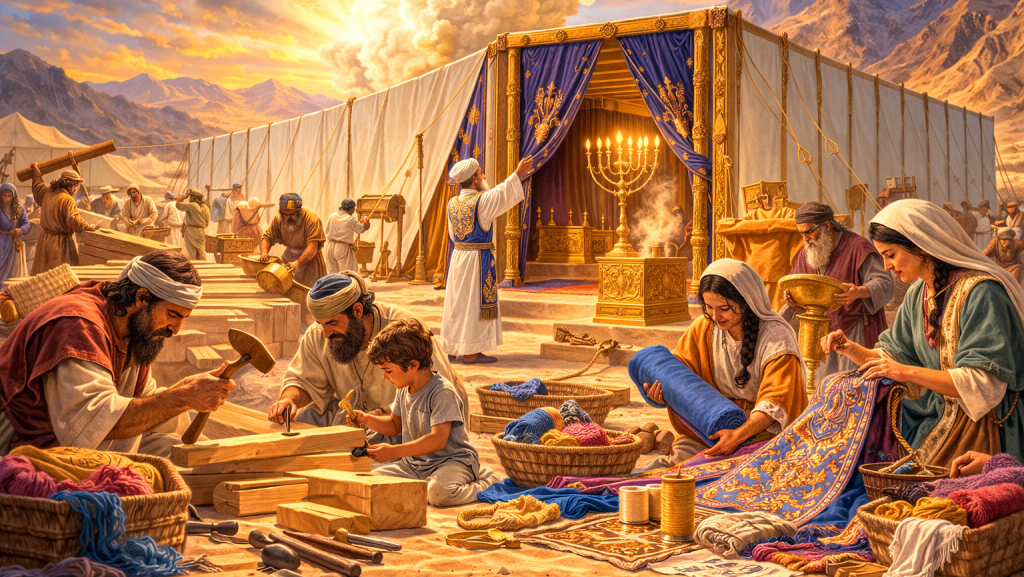
 Español
  English