 +506 72407140
 info@beitshalomcr.org
 Donaciones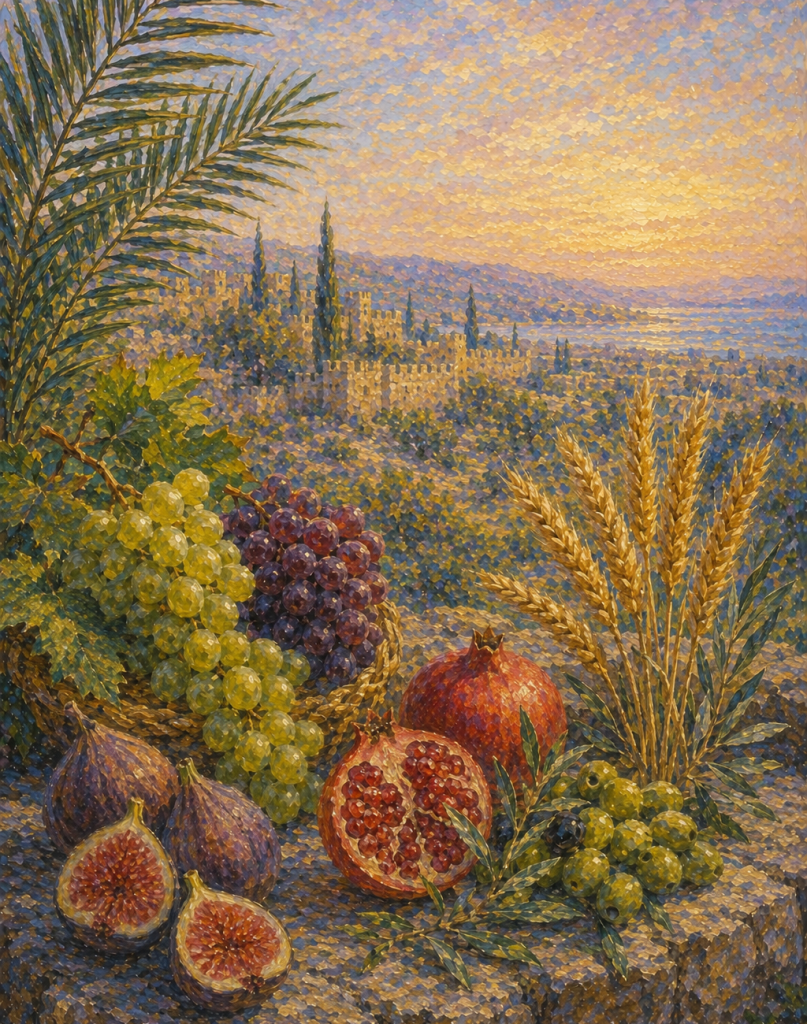
English translation found below
Se le conoce a esta porción de la Torá también con el nombre de Parashat Bikurim, ya que inicia cintándonos la Mitzvah de traer las primicias de los frutos de Éretz Israel al Beit Hamikdash.
Los Bikurim se traían al Templo de los Shivat Haminim, los siete frutos por los que la Tierra de Israel es alabada: trigo, cebada, uvas, higos, granadas, aceitunas y dátiles. No había una medida, la persona colocaba la cantidad que quisiera en un canasto y subía al Monte del Templo a ofrecerlo delante de un Cohen, el cuál mecía esta ofrenda. El oferente no solamente debía entregar estos Bikurim sino que tenía que leer el texto que está definido en esta parashá: “Aramí oved aví…” “un arameo quiso destruir a mi padre y este descendió a Egipto… y se convirtió allí en una gran nación… y nos afligieron los egipcios… y nos sacó el Eterno de Egipto… con señales y prodigios… y nos trajo a una tierra que mana leche y miel…”
Esta hermosa ceremonia tenía como objetivo que en medio de su abundancia la persona nunca olvide su origen y a quién debe agradecimiento por todo lo que tiene. Ser agradecidos es una de las características que nos identifica como pueblo, la palabra “yehudí” (judío) viene del verbo “lehodot” (agradecer); de esta manera un judío(a) es esa persona que vive en constante acción de agradecimiento. Agradecer es también en hebreo reconocer, reconocemos a través de este acto que no somos autosuficientes, que nuestro esfuerzo no valdría de nada sin la bendición divina, sin los milagros de la naturaleza que nos permiten comer y sustentarnos, sin la ayuda de las personas que nos rodean.
Hoy que no tenemos el Beit Hamikdash y no podemos ofrecer los Bikurim una vez al año, nuestros Jajamim establecieron que leamos precisamente este mismo texto en la Hagadá de Pésaj. Qué mejor momento que cuando estamos recordando nuestro origen esclavo y los milagros que el Santo Bendito Sea hizo por nosotros al sacarnos de Egipto. Sin embargo, este ritual y este texto de la Torá es tan solo un recordatorio de un estilo de vida, vivir siendo judío(o) significa vivir día a día agradeciendo.
Acercándose el inicio del nuevo año y en medio del proceso de Jeshbón Néfesh, esa contabilidad que realizamos durante el mes de Elul, es el mejor momento de hacer un inventario de las bendiciones que hemos recibido durante este año y llegar a Rosh Hashaná llenos de agradecimiento y con certeza de que si sabemos reconocer todo lo que hemos recibido no tendremos carencia de nada.
¡Shabat Shalom umevoraj!
Rab. Sem. Dr. Yaakov Rodríguez
Living in Gratitude
This portion of the Torah is also known as Parashat Bikkurim, as it begins by telling us of the mitzvah of bringing the first fruits of the Land of Israel to the Beit HaMikdash.
The Bikkurim brought to the Temple came from the Shivat Haminim, the seven species for which the Land of Israel is praised: wheat, barley, grapes, figs, pomegranates, olives, and dates. There was no prescribed quantity; a person would place whatever amount they wished in a basket and ascend to the Temple Mount to offer it before a Cohen, who would wave the offering. The person making the offering was not only required to present these Bikkurim, but also to recite the text established in this parashah: “Arami oved avi…” — “An Aramean sought to destroy my father, and he went down to Egypt… and became there a great nation… and the Egyptians afflicted us… and the Eternal brought us out of Egypt… with signs and wonders… and brought us to a land flowing with milk and honey…”
The purpose of this beautiful ceremony was to ensure that, in the midst of abundance, a person would never forget their origins or whom they should thank for everything they possess. Being grateful is one of the characteristics that identifies us as a people. The word “Yehudi” (Jew) comes from the verb “lehodot” (to give thanks); thus, a Jew is a person who lives in a constant state of gratitude. In Hebrew, to give thanks also means to acknowledge. Through this act, we acknowledge that we are not self-sufficient, that our own efforts would be worth nothing without Divine blessing, without the miracles of nature that allow us to eat and sustain ourselves, and without the help of the people around us.
Today, when we no longer have the Beit HaMikdash and cannot offer the Bikkurim once a year, our Jajamim established that we read this very same text in the Haggadah of Pesach. What better moment than when we are remembering our origins in slavery and the miracles that the Holy One, Blessed be He, performed for us when He brought us out of Egypt? Yet this ritual and this text from the Torah are only a reminder of a way of life: to live as a Jew means to live day by day in gratitude.
As the beginning of the new year approaches, and in the midst of the process of Jeshbón Néfesh — that spiritual accounting we undertake during the month of Elul — this is the best time to take stock of the blessings we have received throughout the year and arrive at Rosh Hashanah filled with gratitude, with the certainty that if we know how to recognize everything we have received, we will lack nothing.
Shabbat Shalom umevoraj!
Rab. Sem. Dr. Yaakov Rodríguez
 Español
  English