 +506 72407140
 info@beitshalomcr.org
 Donate Now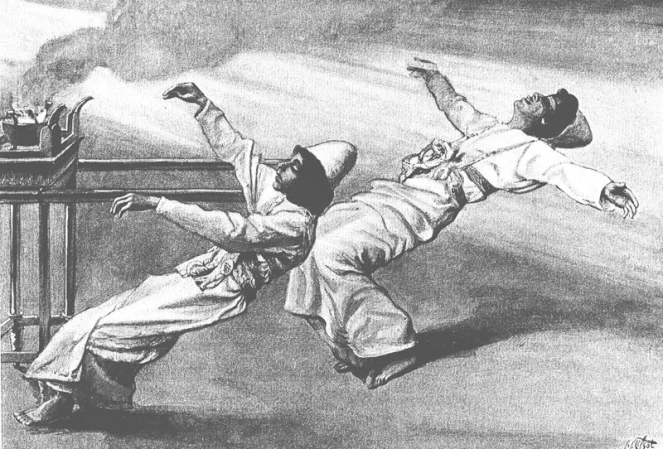
(English translation below)
Inicia la Parashá recordándonos el trágico incidente de la muerte de los hijos de Aarón, Nadav y Avihu, quienes cuenta la Torá fueron consumidos por el fuego divino al ofrecer “Esh Zará” un fuego extraño que D’os no había pedido.
Parshanim (comentaristas) clásicos y diferentes Midrashim tratan de explicar este misterioso evento del cual la Torá escrita no da muchos detalles. Algunos dicen que murieron debido a que estaban ebrios cuando ofrecieron su incienso y fueron ligeros en una labor sagrada, otros dicen que no consultaron a Moshé y Aarón, desdeñando así la autoridad de sus mayores, otros que en su impulsividad incumplieron las estrictas leyes de los korbanot que no deben ser cambiadas. La más interesante de las interpretaciones de este pasaje es la que ofrece la Kabalá; explica que Nadav y Avihu eran personas de un gran nivel espiritual y en su deseo ferviente de estar más cerca de Hashem y unirse a él (concepto conocido como Devekut) se acercaron más de lo que estaban preparados con los utensilios o vasijas (kelim) inapropiados, y de esta manera murieron por el “Beso Divino”.
Representan así Nadav y Avihu, el desequilibrio y la desconexión entre la Sefirá de Jésed (el amor) y la Sefirá de Guevurá (rigor y disciplina), porque un amor desmedido y sin contención y disciplina se convierte en un fuego abrazador y destructivo.
De aquí aprendemos que las intenciones no son suficientes, aún la más elevada de ellas. Se requiere orden, disciplina, preparación y herramientas adecuadas para la elevación espiritual. Muchas personas cometen el error de estos dos Tzadikim, y en su gran deseo de elevarse y descubrir los secretos de la Divinidad, quieren tomar atajos, y terminan utilizando métodos extraños y contrarios a la misma Voluntad Divina. Consideran que en el éxtasis religioso o en las experiencias extrasensoriales, podrán por fin alcanzar ese nivel de conexión y entendimiento y entonces olvidan que el trabajo más importante de ascenso espiritual se logra primero en este plano.
Si bien este incidente sucedió en Parashat Sheminí, es aparentemente interrumpido por las leyes de pureza, y retomado tres porciones de la Torá después en medio de toda una capitulación de preceptos sobre el comportamiento ético, las relaciones justas con las otras personas y la imperatividad de alejarse de las prácticas superficiales de la idolatría y la hechicería. No es esto más que un recordatorio que la santidad se alcanza a través de nuestro comportamiento correcto en el día a día en todos los asuntos mundanos, en la dimensión de Maljut y Olam Haasiá (el mundo de la acción). Es justamente sobre este tipo de comportamientos que nuestra segunda parashá nos ordena “Kedoshim tihiú…” “sean santos porque Yo Soy Santo, el Eterno vuestro Dios”.
La Torá y el judaísmo en general nos enseña que la santidad no está en la desconexión de este mundo para buscar la experiencia mística, primero debemos elevarnos a través de nuestras acciones mundanas y tal vez luego tendremos recipientes adecuados para merecer ese tipo de experiencia más allá de lo físico; no sea que por buscar impulsiva y desordenadamente terminemos, en nuestra búsqueda espiritual, consumidos en fuego.
¡Shabat Shalom umevoraj!
Rab. Sem. Dr. Yaakov Rodríguez
The parasha begins by reminding us of the tragic incident of the death of Aaron’s sons, Nadav and Avihu, who, as the Torah recounts, were consumed by divine fire when they offered “Esh Zarah” — a strange fire that God had not commanded.
Classical parshanim (commentators) and various midrashim attempt to explain this mysterious event, which the written Torah does not elaborate on in detail. Some say they died because they were drunk when they offered their incense and acted lightly in a sacred duty; others say it was because they failed to consult Moshe and Aaron, thus disregarding the authority of their elders; others claim that in their impulsiveness, they violated the strict laws of the korbanot, which must not be altered.
The most intriguing interpretation of this passage is offered by the Kabbalah: it explains that Nadav and Avihu were individuals of great spiritual stature who, in their fervent desire to draw closer to Hashem and unite with Him (a concept known as devekut), approached more than they were prepared for, using improper vessels or kelim, and thus died by the “Divine Kiss.” Nadav and Avihu thus represent the imbalance and disconnection between the sefirah of Chesed (love) and the sefirah of Gevurah (rigor and discipline), because unrestrained love without containment and discipline becomes a consuming and destructive fire.
From this we learn that intentions, even the loftiest ones, are not enough. Order, discipline, preparation, and proper tools are necessary for spiritual elevation. Many people make the mistake of these two tzadikim — in their great desire to ascend and discover the secrets of Divinity, they seek shortcuts and end up using strange and contrary methods to the Divine Will. They believe that through religious ecstasy or extrasensory experiences they will finally reach that level of connection and understanding, and in doing so, forget that the most important work of spiritual ascent begins in this plane.
Although this incident occurred in Parashat Shemini, it is seemingly interrupted by the laws of purity and resumed three portions later, in the midst of an entire section of commandments about ethical behavior, fair relationships with others, and the imperative to distance oneself from the superficial practices of idolatry and sorcery. This serves as a reminder that holiness is attained through our proper daily conduct in all mundane matters — in the dimension of Malchut and Olam HaAsiyah (the world of action). It is precisely regarding such behaviors that our second parasha commands: “Kedoshim tihiyu…” — “You shall be holy, for I, the Eternal your God, am holy.”
The Torah — and Judaism in general — teaches us that holiness does not lie in disconnecting from this world to seek mystical experience. We must first elevate ourselves through our worldly actions, and only then may we be worthy of vessels capable of receiving such an experience beyond the physical. Otherwise, if we seek it impulsively and without order, we may find ourselves consumed in fire during our spiritual search.
Shabbat Shalom umevorach!
Rab. Sem. Dr. Yaakov Rodríguez
 English
  Español