 +506 72407140
 info@beitshalomcr.org
 Donaciones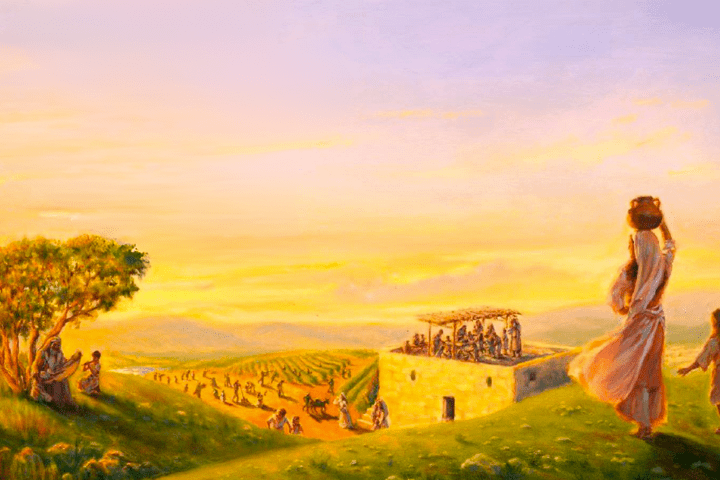
(English translation below)
Nos ordena la Torá en esta porción las leyes relacionadas con el año de Shemitá (año sabático) y Yovel (año de jubileo). El primero sucede cada 7 años y el segundo cada 50, tienen en común la ordenanza de dar descanso a la tierra y por tanto está prohibido sembrar, cultivar o preparar el suelo; las personas deben comer de lo que de forma natural los campos producen y ninguna acción agrícola se realiza durante el año, lo que permitía que las personas dedicaran el año completo al crecimiento espiritual a través del estudio de la Torá.
Tal práctica pareciera ser tan absurda a primera vista, que no vemos algo similar en ninguna otra cultura. El concepto del reposo, tales como Shabat y Shemitá, era una idea completamente desconocida en el mundo antiguo, donde lo que importaba era explotar la tierra y a las personas hasta su máxima capacidad. Los seres humanos sentimos un fuerte arraigo y pertenencia a la tierra, nos da seguridad y confianza, es nuestro hábitat y nos sentimos constantemente dependientes de ella. Necesitamos un gran esfuerzo para poder imaginar nuestra existencia sin el elemento de la tierra que nos sostiene y alimenta. Por lo tanto, el año de Shemitá es una de las Mitzvot que exige un máximo nivel de fe.
Al abandonar la tierra, la persona podía elevar su mirada hacia el otro plano en la cuál también nos encontramos todos, el Cielo. El cielo como representación de lo divino y la tierra como representación de lo mundano, son las dos dimensiones en que nos movemos y existimos. Si lo analizamos, a nivel físico espacial, estamos únicamente apoyados sobre la tierra, no dentro de ella, nuestros pies están sobre el suelo, pero nuestro cuerpo está inmerso en el otro espacio que inicia desde donde termina la superficie terrestre y se extiende hasta el fin de la atmósfera que rodea nuestro planeta, es decir que ocupamos nuestro espacio literalmente inmersos en el cielo. Shemitá buscaba recordarle esto a las personas, estás aquí sobre la tierra sí, pero tu existencia está más allá de este plano. Al dejar de cultivar la tierra y confiar en la abundancia de los seis años anteriores, la persona reconocía humildemente que su sustento en este mundo no dependía de sí misma sino de Dios, y esto le permitía salir de la inercia de la rutina mundana y poner su atención en su verdadera naturaleza eterna.
Shemitá viene a recordarnos que la existencia se trata de algo más que trabajar, comer, vestirse y acumular bienes, se trata principalmente del reto de elevarnos a nuestro máximo potencial de conexión divina y dejar un legado que sea guía en el camino para otros que vienen detrás. Sin embargo, no podemos hacer esto sino buscamos espacios de desconexión de la inconsciencia que nos rodea. Atreverse a abandonar las tareas diarias, a dejar de arar y cosechar nuestro campo por un instante, para dedicarnos tiempo a mirar hacia adentro y hacia arriba, requiere un compromiso de absoluta fe y disciplina, ya que constantemente pensamos que si dejamos de hacer, todo se cae y deja de funcionar. Ya sea a través de los tiempos de plegaria y meditación, del Shabat y las festividades sagradas del año, tenemos espacios que fueron creados para nosotros con el propósito de encontrar nuevamente ese lugar que ocupamos en el Cielo. Shemitá también nos enseña que no somos los dueños de este mundo, nos fue prestado para disfrutar de él pero también para cuidarlo, y esta idea busca prevenirnos de la soberbia y motivar en nosotros la humildad, una de las más elevadas virtudes.
Necesitamos cíclicamente tiempos de Shemitá, que nos recuerden que nos deslizamos sobre un plano físico, pero aunque lo olvidemos debido al apremio de las labores físicas, estamos siempre inmersos en la dimensión de lo divino.
Shabat Shalom umevoraj
Rab. Sem. Dr. Yaakov Rodriguez
Between Earth and Heaven
In this portion, the Torah commands us regarding the laws of Shemitah (the sabbatical year) and Yovel (the jubilee year). The former occurs every seven years and the latter every fifty; both share the commandment to allow the land to rest. Therefore, sowing, cultivating, or preparing the soil is prohibited. People must eat only what the fields naturally produce, and no agricultural work is done during the year, allowing individuals to dedicate the entire year to spiritual growth through the study of Torah.
Such a practice might initially seem absurd, as we see nothing similar in any other culture. The concept of rest—such as Shabbat and Shemitah—was entirely unknown in the ancient world, where the focus was on exploiting land and people to their fullest capacity. Human beings feel a strong attachment and sense of belonging to the land; it gives us security and confidence, it is our habitat, and we constantly feel dependent on it. It requires great effort to imagine our existence without the land that sustains and nourishes us. Therefore, the Shemitah year is one of the mitzvot that demands the highest level of faith.
By stepping away from the land, a person could raise their gaze to the other realm in which we also exist: the Heaven. Heaven, as a representation of the divine, and Earth, as a representation of the mundane, are the two dimensions in which we move and live. If we analyze it, on a physical and spatial level, we are only supported by the land, not within it; our feet are on the ground, but our bodies are immersed in the other space that begins where the surface ends and stretches to the limits of the atmosphere surrounding our planet. In other words, we literally occupy our space immersed in the heavens. Shemitah sought to remind people of this: yes, you are here on Earth, but your existence goes beyond this plane. By ceasing to cultivate the land and trusting in the abundance of the six previous years, a person would humbly acknowledge that their livelihood does not depend on themselves but on God. This enabled them to break free from the inertia of mundane routine and turn their attention to their true eternal nature.
Shemitah reminds us that existence is about more than working, eating, dressing, and accumulating wealth. It is primarily about the challenge of rising to our highest potential for divine connection and leaving a legacy to guide others who come after us. However, we cannot do this unless we seek spaces to disconnect from the unconsciousness that surrounds us. Daring to abandon our daily tasks, to stop plowing and harvesting our fields for a moment in order to dedicate time to look within and upward, requires a commitment of absolute faith and discipline, as we constantly fear that if we stop doing, everything will collapse. Whether through times of prayer and meditation, Shabbat, or the sacred holidays of the year, we are given spaces created specifically to help us find once again that place we occupy in Heaven. Shemitah also teaches us that we are not the owners of this world. It has been loaned to us to enjoy—but also to care for—and this idea seeks to prevent arrogance and inspire in us humility, one of the highest virtues.
We cyclically need times of Shemitah, which remind us that although we glide across a physical plane, and may forget it due to the urgency of physical labor, we are always immersed in the dimension of the Divine.
Shabbat Shalom Umevorach
Rab. Sem. Dr. Yaakov Rodriguez
 Español
  English