 +506 72407140
 info@beitshalomcr.org
 Donaciones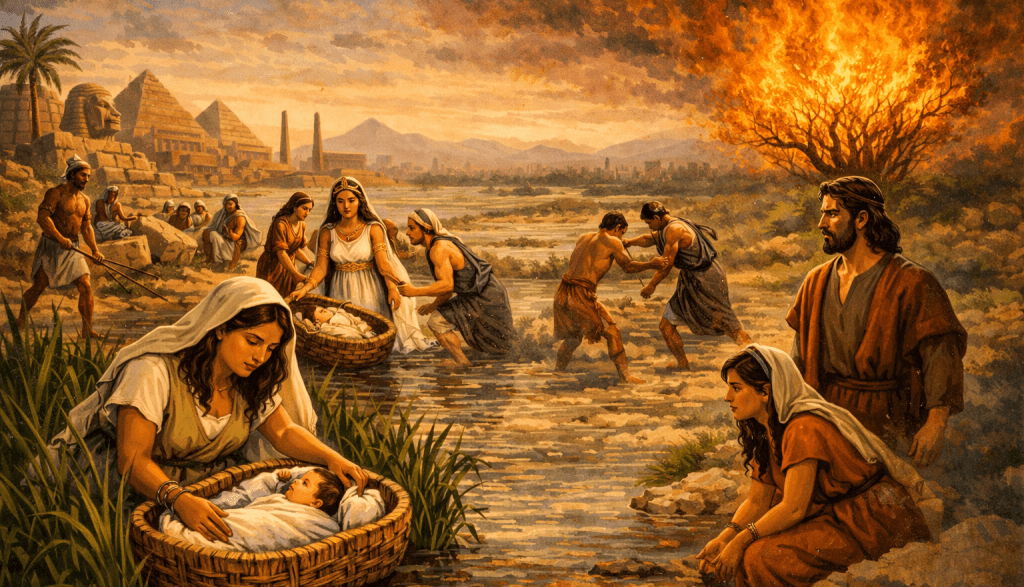
English translation found below
Iniciamos un nuevo libro de la Torá, Shemot, en donde se nos relatan las maravillosas historias relacionadas con la salida de los israelitas de Egipto y su redención de la esclavitud. La Torá nos cuenta en esta Parashá los orígenes de Moshé como líder y sus conflictos internos.
En un episodio bastante conocido gracias al cine, Moshé se encuentra hablando con Dios frente a una zarza ardiente, un arbusto del desierto que se encuentra en llamas y a pesar de eso no se quema. Nuestros sabios, de bendita memoria, comparan a este arbusto con Am Israel, que a pesar de las persecuciones, el exilio y el sufrimiento, el fuego no consigue destruirlo, por el contrario se convierte en el vehículo a través del cual Dios comunica su mensaje.
De aquí podemos aprender cada uno de nosotros cuáles son las cualidades necesarias para convertirse en un instrumento de Dios. La zarza es un arbusto que poco tiene de atractivo, es pequeño, no muy frondoso, pero aún así sobrevive en el desierto. La humildad, representada en la zarza y también en la figura de Moshé Rabenu, son la característica principal que busca el Santo, Bendito Sea, en cada uno de nosotros. Sin humildad es imposible percibir la Divinidad.
Por otro lado, nadie logra realmente conectarse con su alma superior sino es a través del fuego. Los sabios también comparan a la Torá con el fuego, es decir, ya sea a través del fuego de la prueba o a través del fuego de la Torá, podremos escuchar la voz de Dios y entender nuestra misión y el propósito de nuestra vida.
Qué tipo de fuego nos vaya a recordar nuestra humilde naturaleza, es muchas veces nuestra decisión. Así como Moshé descubrió su misión y el potencial de su grandeza frente a la zarza ardiente; así nosotros podamos ser humildes para llegar a ser grandes.
Shabat Shalom umevoraj!
Rab. Sem. Yaakov Rodriguez
Burning Without Being Consumed
We begin a new book of the Torah, Shemot, in which we are told the wondrous stories related to the exodus of the Israelites from Egypt and their redemption from slavery. In this parashah, the Torah recounts the origins of Moshe as a leader and his inner struggles.
In an episode well known thanks to cinema, Moshe finds himself speaking with God before a burning bush—a desert shrub that is aflame and yet is not consumed. Our sages, of blessed memory, compare this bush to Am Israel, which, despite persecutions, exile, and suffering, is not destroyed by the fire. On the contrary, the fire becomes the vehicle through which God conveys His message.
From this we can learn, each of us, what qualities are necessary to become an instrument of God. The bush is a plant with little outward appeal: it is small, not very lush, and yet it survives in the desert. Humility—represented by the bush and also by the figure of Moshe Rabbeinu—is the primary trait that the Holy One, blessed be He, seeks in each of us. Without humility, it is impossible to perceive the Divine.
On the other hand, no one truly connects with their higher soul except through fire. The sages also compare the Torah to fire—that is, whether through the fire of trial or through the fire of Torah, we are able to hear the voice of God and understand our mission and the purpose of our lives.
What kind of fire will remind us of our humble nature is, many times, our own choice. Just as Moshe discovered his mission and the potential of his greatness before the burning bush, so may we be humble in order to become great.
Shabbat Shalom umevorach!
Rab. Sem. Dr. Yaakov Rodriguez
 Español
  English