 +506 72407140
 info@beitshalomcr.org
 Donate Now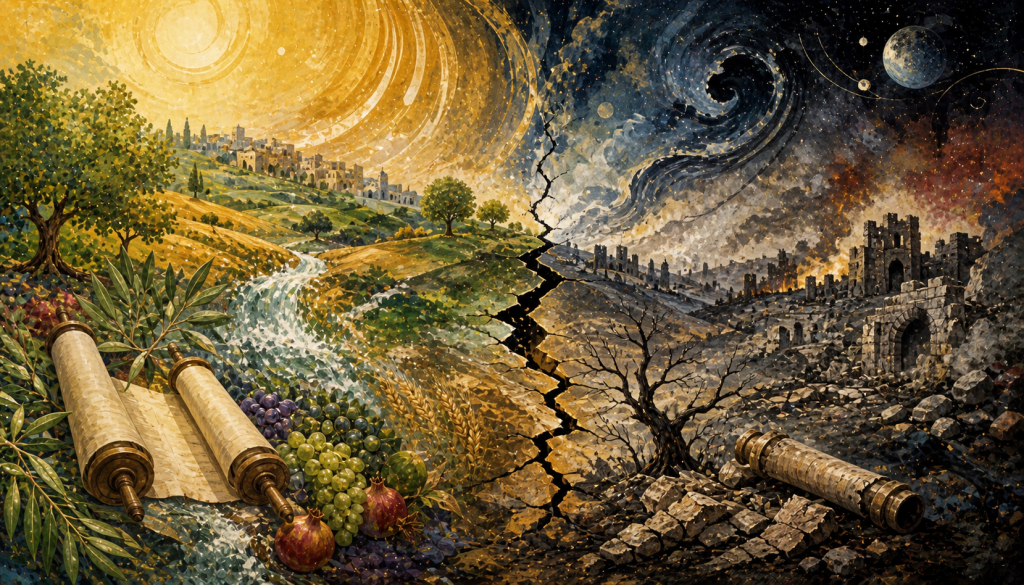
English translation found below
La segunda Parashá de esta semana incluye una sección poco querida por muchos, asociada incluso a un temor por su contenido, como si se tratase de una maldición que ni siquiera queremos escuchar en voz alta. Se trata de la “Tojajá”, la advertencia o reprensión que recibió Am Israel en la Torá sobre las consecuencias de no cumplir el pacto y la observancia de las Mitzvot; entre estas: guerra, hambruna, destrucción y exilio. Es imposible no leer en este texto los ecos de episodios terroríficos de la historia judía. Para Najmanides no hay duda de que se trata de una profecía histórica que narra el futuro de un Pueblo Judío que no pudo mantener su vínculo con Dios y Su Torá.
La forma más simple en que hemos aprendido a interpretar esta lectura está asociada al concepto de castigo. Sin embargo, para muchos comentaristas clásicos como Ibn Ezra, no es más que la inevitable consecuencia del desorden social y espiritual. El universo está regido por leyes físicas como la gravedad, la inercia y el movimiento, etc. También existen leyes biológicas y fisiológicas que regulan el equilibrio de los ecosistemas y cómo funciona un organismo. Nadie cuestiona estas leyes, sin la gravedad el planeta Tierra saldría de su órbita y la vida en él sería imposible; un pequeño desequilibrio en el ecosistema pone en riesgo a todas las criaturas que lo habitan; sin agua suficiente nuestro cuerpo empieza a colapsar y es imposible sobrevivir.
Nadie se rebela contra estas leyes, las acepta como parte del orden natural, no escuchamos a las personas blasfemar contra la gravedad, o decir que quieren poder elegir entre vivir o no sin agua; simplemente no es posible y lo aceptamos.
Las leyes sociales y espirituales no son distintas, son necesarias y parte del orden natural del universo. Cuando decidimos ir en contra de las mismas el resultado es el caos. Para Abraham Joshua Heschel, la Parashá habla de cómo el comportamiento humano afecta directamente el vínculo con la Divinidad. Cuando el vínculo se rompe reina el desorden y la desesperanza. Rab. Jonathan Sacks z’l apunta a que el pacto de la Torá implica dos dimensiones: libertad del individuo y responsabilidad colectiva. Cuando una de estas dos dimensiones está ausente suceden todas las tragedias de la Tojajá.
Vivimos un tiempo en el que hemos idolatrado a un punto insostenible la libertad individual, y ese individualismo enfermo nos ha convertido en personas egoístas, desconectadas, insatisfechas y ansiosas. El judaísmo y su propuesta de espiritualidad comunitaria de destino compartido nos llama constantemente a tomar responsabilidad por uno mismo pero también por los demás, a entender que las acciones de uno afectan a todos y que el pacto se protege a través del compromiso compartido.
Shabat Shalom umevoraj
Rab. Sem. Dr. Yaakov Rodríguez
 English
  Español