 +506 72407140
 info@beitshalomcr.org
 Donate Now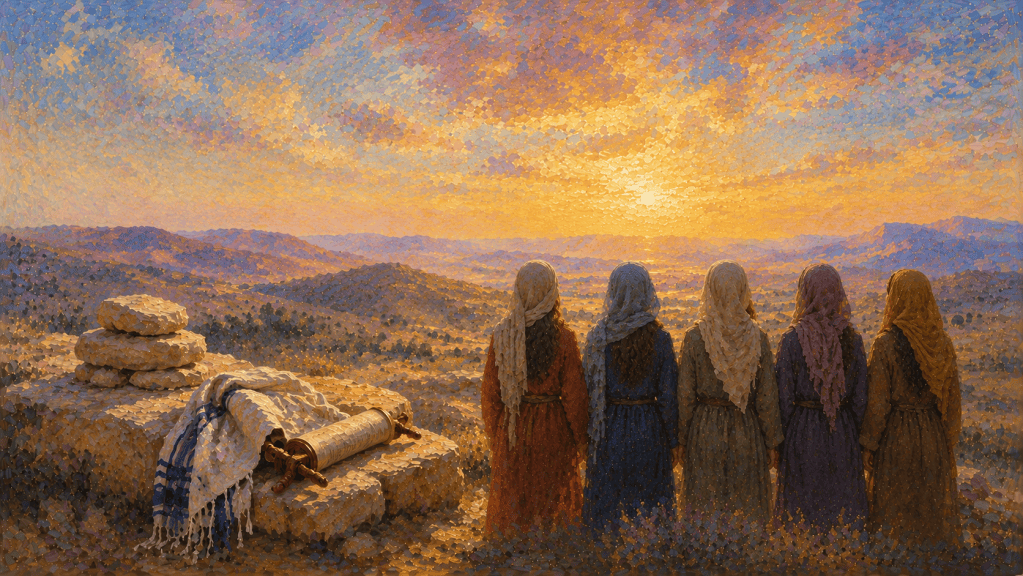
English translation found below
La Torá narra en está Parashá tal vez uno de los primeros reclamos “feministas” de la historia. Se trata de las hijas de Tzelofjad, quienes habían quedado huérfanas de su padre, el cual no engendró varones, y por lo tanto, según la ley y la costumbre, no tenían ningún derecho a heredar tierras.
Pero las hijas de Tzelofjad no se conformaron con lo que dictaba la ley o la norma, consideraron que esto era injusto y exigieron su derecho de igualdad y de herencia. Y adivinen qué, D’os le dice a Moshé que tienen la razón, que su reclamo es legítimo.
¿Creen ustedes que estas mujeres hubieran logrado un cambio en el Status Quo si hubieran permanecido calladas y conformes? Definitivamente no. Hoy ellas son un ejemplo para nosotros, de no quedar pasivos ante las injusticias y los fundamentalismos, aún si esto es lo “normal” “lo aceptado” “la costumbre”. El judaísmo ha logrado sobrevivir gracias al continuo cuestionamiento de la vigencia de las leyes y su aplicación a las nuevas realidades. Durante el período del Primer Templo, los profetas cuestionaron el sistema sacerdotal, en Babilonia los judíos se vieron obligados a crear nuevas formas de observancia en una realidad apátrida, durante el retorno a Sión Ezra y los sabios de la Gran Asamblea realizaron grandes reformas que han llegado a nuestros días, después de la destrucción del Segundo Templo nuestros sabios recrearon las formas del judaísmo en el Talmud, y así a lo largo de los siglos hemos revisado una y otra vez nuestra forma de guardar la Torá.
El judaísmo no es dogmático, no creemos a ciegas y sin cuestionamientos en verdades misteriosas, es por el contrario una tradición cien por ciento interpretativa y esta característica le ha permitido reinventarse una y otra vez para seguir, no solamente existiendo; ya que no hay un valor intrínseco en el solo hecho de existir; sino para seguir siendo relevante.
Cuestionar implica salir de la zona de confort y los cambios se logran mediante la valentía de enfrentarse al Status Quo, por más incómodo que esto sea.
Shabat Shalom umevoraj
Rab. Sem. Dr. Yaakov Rodríguez
Questioning the Status Quo
In this week’s Parashah, the Torah recounts what may be one of the earliest “feminist” appeals in history. It is the story of the daughters of Tzelofhad, who had lost their father. Since he had no sons, the law and the accepted custom denied them any right to inherit land.
But the daughters of Tzelofhad did not simply accept what the law or tradition dictated. They recognized the injustice and demanded their right to equality and inheritance. And, remarkably, God tells Moses that they are right—that their claim is legitimate.
Do you think these women would have changed the status quo had they remained silent and complacent? Certainly not. Today, they stand as an example for us: not to remain passive in the face of injustice and fundamentalism, even when something is considered “normal,” “accepted,” or “customary.”
Judaism has survived precisely because it has continually questioned the application of its laws and their relevance to new realities. During the First Temple period, the prophets challenged the priestly establishment. In Babylon, the Jewish people were forced to develop new forms of observance while living without a homeland. During the return to Zion, Ezra and the sages of the Great Assembly introduced profound reforms that continue to shape Jewish life today. After the destruction of the Second Temple, the sages reimagined Jewish practice through the Talmud. Thus, throughout the centuries, we have repeatedly reexamined the way we observe the Torah.
Judaism is not dogmatic. We do not believe blindly or uncritically in mysterious truths. On the contrary, Judaism is an entirely interpretive tradition, and it is precisely this characteristic that has enabled it to reinvent itself time and again—not merely to survive, for there is no inherent value in mere existence—but to remain relevant.
To question requires stepping outside our comfort zone, and meaningful change is achieved only through the courage to confront the status quo, no matter how uncomfortable that may be.
Shabbat Shalom uMevorach!
Rab. Sem. Dr. Yaakov Rodriguez
 English
  Español